
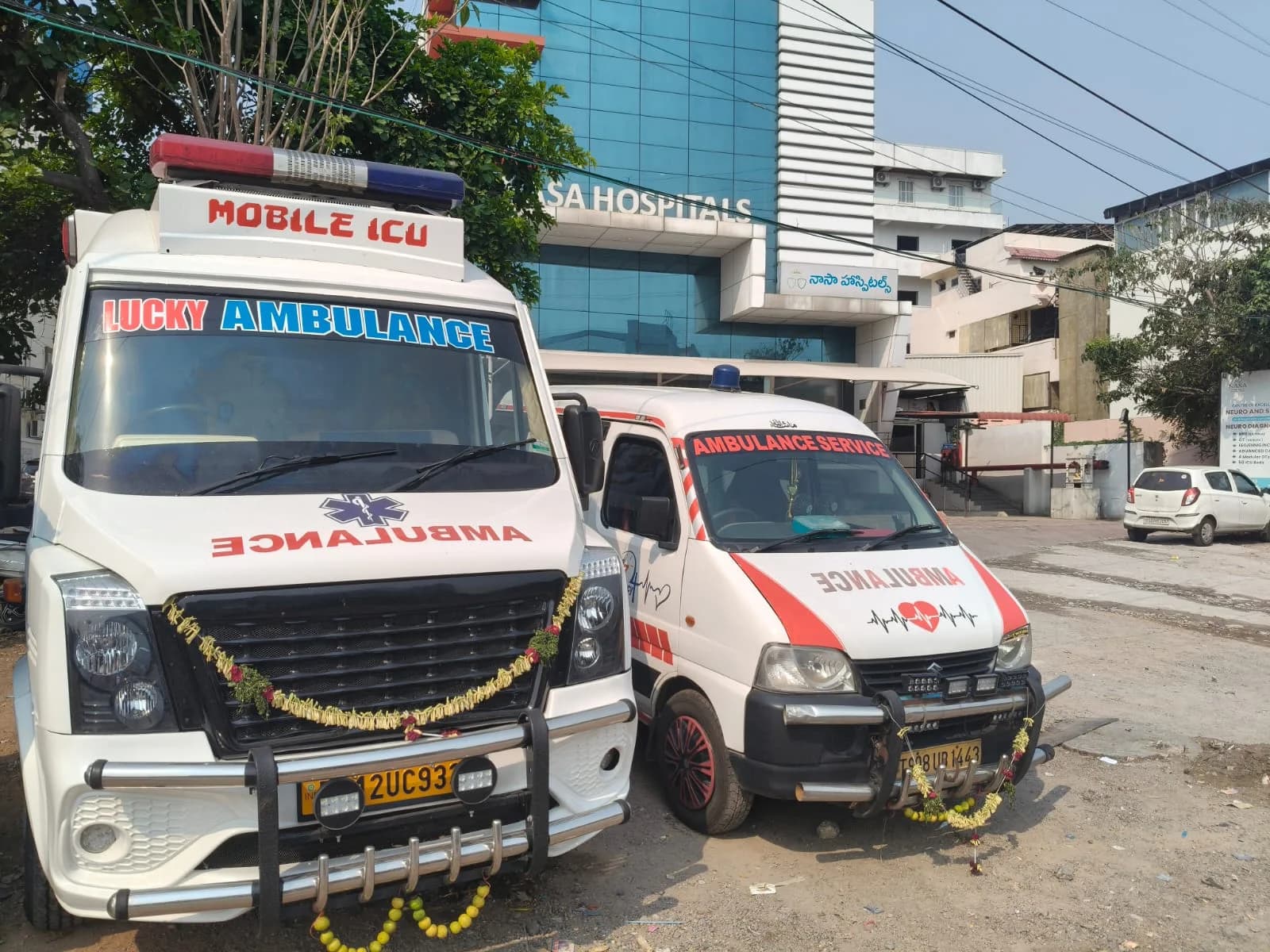
In an emergency, the few seconds it takes to make the call can feel like the hardest part. Knowing what to expect from that call — and what information actually speeds things up — removes a layer of panic and gets an ambulance moving toward you faster.
This guide walks through the full process: what to say, what the dispatcher needs from you, and what happens between the call and the ambulance reaching your door.
1. Call the right number immediately
For a private ambulance service like ours, calling or messaging directly on WhatsApp gets you straight through to a live coordinator rather than a general helpline queue. Save the number in your phone before you need it — searching for it during an actual emergency wastes time you don't have.
For life-threatening emergencies where you don't have a saved private number, India's national emergency number 112 also routes to ambulance, police, and fire services.
2. Give your exact location first
Location is the single biggest factor in response time. A vague address like "near Gachibowli" can cost several minutes compared to a precise one. If you're not sure of the exact address, share your live location over WhatsApp — it's often faster and more accurate than describing it verbally.
- House/flat number, building name, and street — not just the general area
- The nearest visible landmark (a hospital, mall, junction, or well-known shop)
- Floor number and whether there's a lift, if you're in an apartment
- Any gate codes or security checkpoints the crew will need to clear
3. Describe the patient's condition clearly
The dispatcher isn't asking out of curiosity — the patient's condition determines which vehicle gets sent. A patient who's stable and conscious needs a different response than one who's unresponsive or struggling to breathe.
- Is the person conscious and breathing normally?
- Are they in pain, and if so, where?
- Is there visible bleeding, and how severe?
- Do they have any known conditions — heart disease, diabetes, breathing issues?
- Are they currently on oxygen, a ventilator, or any medical device?
4. Answer follow-up questions instead of rushing off the call
It's natural to want to hang up and get back to the patient, but staying on the line a few seconds longer usually helps. Our coordinators may ask about access to the building, whether someone can wait outside to guide the crew, or whether you need guidance on immediate first-aid steps while help is on the way.
5. Prepare the space while the ambulance is en route
- Unlock the main door and clear any obstacles in hallways or stairwells
- Send someone to the building entrance or street to flag down the crew
- Gather the patient's ID, any regular medications, and insurance details if readily available
- Keep pets secured in another room
What affects how fast an ambulance reaches you
Response time depends on a mix of factors: how far the nearest available unit is, traffic conditions at that hour, how precise your location details were, and whether the building is easy to access. We cover this in more depth in our guide to ambulance response times in Hyderabad.
Related questions
That's fine — give whatever information you do know. Paramedics are trained to assess the patient on-site and don't require a complete medical history to begin care.
On this page
Related services
Need an ambulance now?
Our team is available 24×7 for emergency dispatch and scheduled transport across Hyderabad.